Historic cabin with an integrated washbasin or suite with a private shower, tuxedo recommended or simply elegant attire: the Orient-Express experience varies dramatically depending on your ticket category. Before booking, the question worth asking is not just “what should I wear?” but rather “does a night without a private shower and with luggage out of reach during the journey really fit your idea of luxury?”
Orient-Express cabins and bathrooms: what changes by category
The most common point of confusion for prospective passengers concerns the bathroom facilities. Two trains carry the Orient-Express name, and their amenities differ dramatically.
| Feature | VSOE – Historic Cabin | VSOE – Suite / Grand Suite | La Dolce Vita (all cabins) |
|---|---|---|---|
| Washbasin in cabin | Yes | Yes | Yes |
| Private shower | No | Yes | Yes |
| Private toilet | No (shared in the carriage) | Yes | Yes |
| Access to large luggage | No (stored in a separate baggage car) | No (stored in a separate baggage car) | Varies by package |
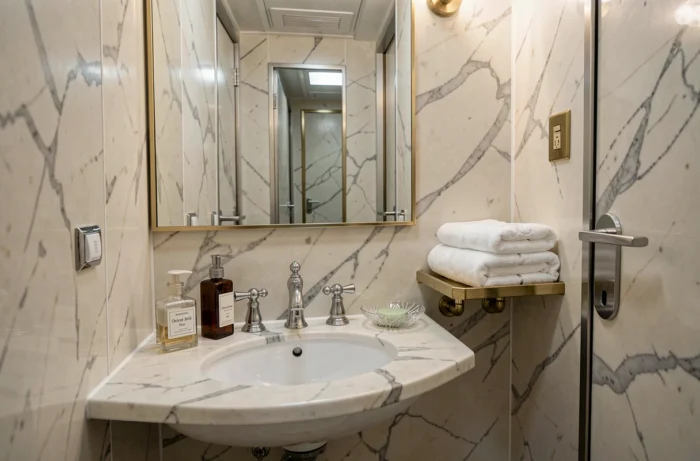
On the Venice Simplon-Orient-Express, historic cabins have neither a shower nor a private toilet. The washbasin is concealed behind an inlaid wood panel, while the toilets are at the end of the carriage. Suites and Grand Suites, by contrast, have a full bathroom with a shower.
La Dolce Vita, the new Orient-Express train operating in Italy, has taken a different approach: every cabin has a shower room, regardless of fare category. This technical detail reshapes the comfort-to-price comparison between the two trains.
A detailed article on the Orient-Express dress code and bathrooms explains the differences between these categories and what they mean in practice during your stay.
Orient-Express dress code: tuxedo required or simply elegant?
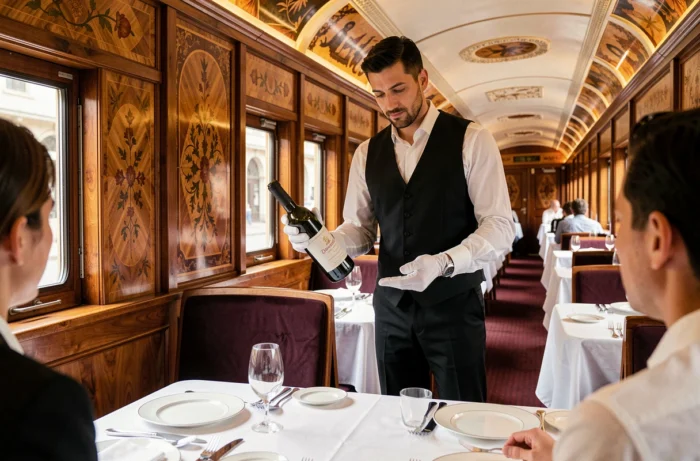
Dinner on board remains the most formal part of the journey. The restaurant cars, with their Art Deco panels and brass lamps, create an elegant atmosphere. A tuxedo is welcome, but available sources do not confirm that it is strictly required.
The evening dress code is an invitation, not an absolute “black tie” rule. It is best to check the guidance Belmond provides for your chosen departure, as expectations may vary by route and season. To be on the safe side, pack formal evening wear; there is no need to invest in a tuxedo if you would never wear one elsewhere.
During the day, the atmosphere is more relaxed. Smart casual attire is sufficient for lunch and time in the bar lounge. Sneakers and very casual jeans are best avoided.
What to pack in your carry-on bag
Large suitcases travel in a separate baggage car and are not accessible during the journey. Everything you need for the night and the following morning must fit in a small bag that you keep with you.
- A complete evening outfit (dress or suit), as dinner takes place a few hours after boarding
- Nightwear and toiletries, since historic cabins do not have a shower
- An outfit for the following morning, for breakfast and arrival at the station
- A change of shoes suitable for dinner, if you board wearing walking shoes
Overlooking this logistical detail can turn a glamorous evening into a source of frustration.
The real comfort of Venice Simplon-Orient-Express historic cabins
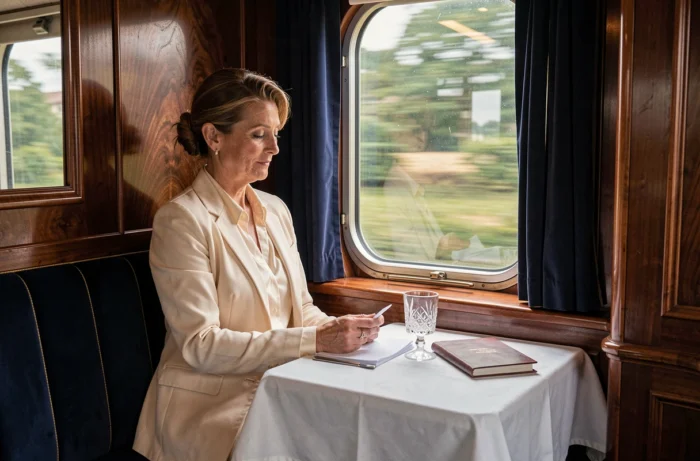
The Agatha Christie myth does not prepare you for the reality of a 1920s train compartment, even one that has been carefully restored. Entry-level cabins retain a compact layout: a bench that converts into bunk beds, with the upper berth reached by a small ladder.
The space is that of a historic sleeper carriage, not a hotel room. For people who sleep poorly in tight spaces or have mobility difficulties, the upper berth presents a real practical challenge. The charm of polished wood and brass does not necessarily make up for the lack of room to stand comfortably.
The more spacious suites offer a double bed, a private sitting area and that famous bathroom with a shower. The price reflects this difference in comfort: a Grand Suite costs a significant multiple of the base fare for a historic cabin.
Two trains, two philosophies of rail luxury
The Venice Simplon-Orient-Express focuses on heritage and authenticity. Its carriages date from the 1920s and 1930s and have been restored to their original condition. The luxury lies in the history, the materials and the dining-car service.
La Dolce Vita, on the other hand, is designed for contemporary comfort. A shower in every cabin, modern interiors and Italian itineraries. Its positioning is different: less nostalgia, more functionality.
The choice between the two depends on what you value. If it is the historic experience and the prestige of the name, the VSOE remains the benchmark. If everyday bathroom comfort matters most, La Dolce Vita removes the main drawback of classic cabins.
Orient-Express: the constraints the brochure does not highlight
- Overnight journeys in a historic cabin mean sharing the toilets with other passengers in the carriage
- The baggage car is locked, so there is no way to retrieve an item left in your main suitcase
- The train’s sway and the sound of the rails remain noticeable, even in restored carriages, which may disturb light sleepers
These points do not diminish the value of the journey. They simply help you choose the right cabin category with a clear understanding of what to expect, rather than discovering these realities on board. Your level of comfort depends entirely on the category you book, and the gap between entry-level and top-tier accommodation is far greater than in a typical hotel.