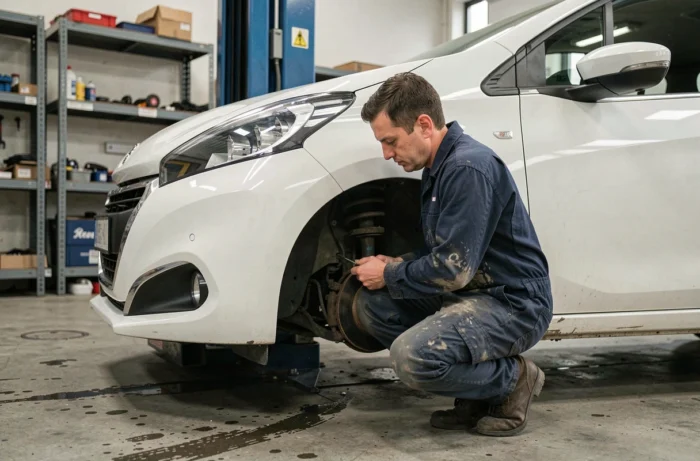
Between the commercial success of the Peugeot 208 and the mechanical reality of the used car market, the gap is mainly measured at the time of purchase. The recurring breakdowns of the 208 are not random: they depend on the engine type, the model year, and the maintenance history. Identifying the weak points by engine block allows filtering ads even before the visit.
Peugeot 208 Failures by Engine Type: Comparative Risk Table
The range of the 208 I (2012-2019) covers about ten engine types with very different reliability profiles. The table below summarizes the documented defects according to the type of block.
| Engine Type | At-Risk Component | Type of Failure | Most Affected Model Years |
|---|---|---|---|
| 1.2 PureTech 82/110 (EB2) | Wet timing belt | Breakage, stretching, oil contamination | 2013-2017 |
| 1.2 PureTech 110 turbo (EB2DT) | Oil strainer, oil separator | Oil pressure drop, engine failure | 2015-2018 |
| 1.0 VTi (ZMZ) | Chain distribution | Few significant reports | – |
| 1.4/1.6 HDi (DV4/DV6) | Injectors, EGR valve | Clogging, power loss | 2012-2016 |
| 1.6 BlueHDi (DV6FC) | AdBlue system, DPF | Incomplete regeneration, engine warning light | 2015-2019 |
What stands out: the 1.2 PureTech accounts for the majority of serious failures, far ahead of the other blocks. The 1.0 VTi, less powerful, paradoxically proves to be the most reliable in the gasoline range. On the diesel side, problems exist but are more classic and less costly to address.
As detailed in the Zone Auto article, the PureTech versions produced between 2013 and 2017 accumulate the most reports, making them the model years to check as a priority.
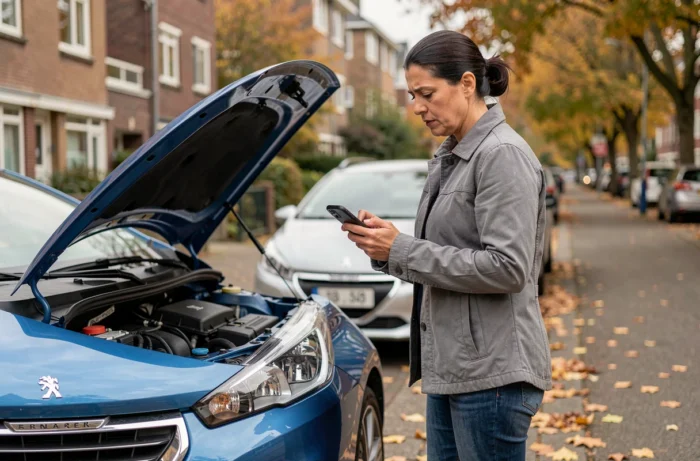
Wet Timing Belt of the PureTech: What Really Causes Breakage
The timing belt of the 1.2 PureTech engines is immersed in engine oil. This technical choice, intended to reduce friction and noise, creates a cascading problem when the oil degrades.
Particles from combustion gradually contaminate the lubricant. The belt absorbs these residues, loses its elasticity, and then stretches or breaks. A degraded PureTech belt can break without prior symptoms, and the breakage often leads to engine destruction due to piston-valve contact.
The mechanism is not limited to the belt itself. On the turbo 110 hp version (EB2DT), the oil suction strainer becomes clogged with belt debris. Oil pressure drops, and the turbo and crankshaft bearings experience accelerated wear. The oil separator, responsible for separating oil vapors from crankcase gases, becomes clogged in turn.
Signals to Check Before Purchase
- The oil pressure warning light that briefly illuminates when cold may indicate a partially obstructed strainer, a sign that the belt has already begun to deteriorate
- A higher than one liter oil consumption between two oil changes often indicates a problem with the oil separator or piston rings, common on PureTech engines with average mileage
- The maintenance history should mention the replacement of the wet belt and strainer if the vehicle exceeds the mileage or age threshold recommended by the manufacturer
- A switch to limp mode (sudden power loss, steady engine warning light) is an indication of advanced failure in the oil circuit or timing system
Manufacturer Coverage for PureTech: What Ads Don’t Specify
Peugeot has implemented coverage measures for PureTech engines affected by the wet belt issue. However, this coverage is neither automatic nor uniform.
Maintenance performed outside the network or without proof may be enough to exclude a vehicle from coverage. The manufacturer generally requires proof that the oil change and replacement intervals have been respected according to its recommendations. An ad mentioning “Guaranteed PureTech” does not constitute a contractual commitment from the private seller.
Checking the VIN (vehicle identification number) with a Peugeot dealership allows you to find out if the targeted example is subject to a recall, and especially if the corrective action has been carried out. The RappelConso database lists official campaigns by model and series, but it does not replace direct verification with the network.
Recall and Recurring Failure: A Distinction to Keep in Mind
A manufacturer recall targets a specific series identified as defective, with a defined corrective measure. It does not mean that all 208s of a generation are affected. Conversely, the absence of a recall on a given example does not guarantee anything about its future reliability. Both pieces of information (recall status and actual mechanical condition) complement each other without replacing one another.
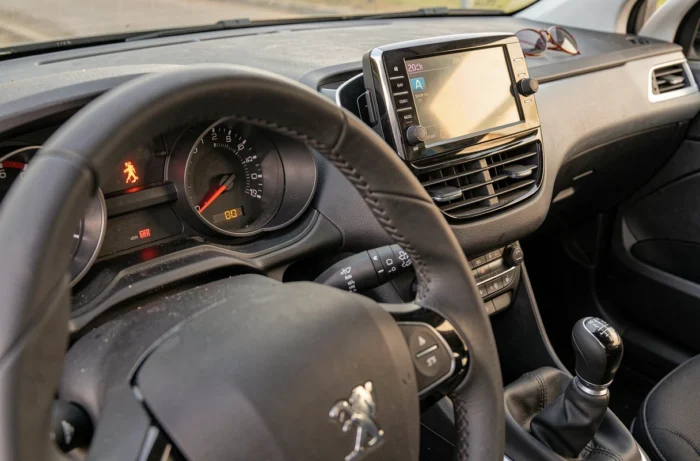
Peugeot e-208 Electric: Failures of a Different Type
The electric 208 II (e-208) avoids distribution and oil circuit problems, but it is not free from defects. Recalls have been issued for risks of propulsion loss related to software or electrical defects, not just to the traction battery.
These campaigns concern specific series. The used buyer should request the history of recalls and software updates from the dealer. A prolonged test drive, including phases of regenerative braking and hot acceleration, remains the best filter before commitment.
Diesel HDi and BlueHDi: More Predictable Weaknesses
The diesel blocks of the 208 (1.4 HDi, 1.6 HDi, 1.6 BlueHDi) present recurring but better-documented defects, often less costly than PureTech failures. Injectors and the EGR valve clog on vehicles primarily driving in the city, with short trips that prevent the engine from reaching its optimal temperature.
On BlueHDi versions, the particulate filter (DPF) can cause problems if regenerations do not occur completely, triggering a warning light and a switch to limp mode. An urban diesel with low annual mileage is often at greater risk than a highway diesel, which reverses the usual intuition about wear.
HDi parts are widely available on the reuse market, which keeps repair costs down. Replacing an injector or an EGR valve on these engines remains a common operation for independent mechanics.
The reliability gap between the engine types of the 208 is the most determining factor for a successful used purchase. A 1.0 VTi with a well-maintained history or a highway diesel with consistent mileage statistically poses fewer problems than a PureTech 110 with an unclear timing history. The choice of engine, more than that of the model year or trim level, conditions the maintenance bill in the following years.