What design trends are truly shaping interiors in 2026, and which ones remain confined to trade shows? Between the return of embraced craftsmanship, playful shapes that challenge the dominant minimalism, and materials rooted in local know-how, the gap between what exhibitors at Maison&Objet showcase and what is found in homes deserves to be measured.
Decor Trends 2026: What Maison&Objet Highlights Compared to Household Choices
| Trend Observed at the Show | Presence in Common Interiors | Estimated Adoption Level |
|---|---|---|
| Craftsmanship and Embraced Irregularities | Handcrafted ceramics, small series in stoneware | Growing, especially in accessories |
| Playful Shapes and Unexpected Proportions | Living room furniture, lighting fixtures | Still confidential |
| Locally Reinterpreted Materials (e.g., Korean hanji paper) | Decorative objects, niche wall coverings | Very limited outside of designer pieces |
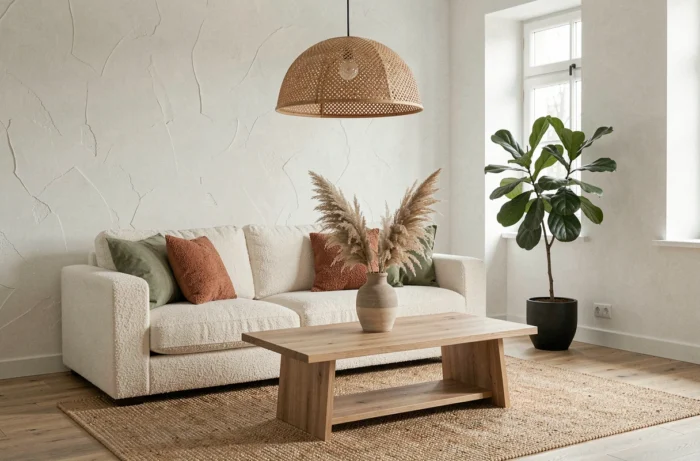
| Soothing Ambiances, Warm Minimalism | Sand palette, light wood, neutral textiles | Dominant in the majority of projects |
| Energy Renovation Linked to the Decor Project | MaPrimeRénov’ pathway refocused in 2026 | On the rise, constrained by regulations |
This table reveals a clear discrepancy. The most publicized trends at design shows (quirky shapes, exotic know-how) are slowly making their way into homes. Soft palettes and organic materials, on the other hand, largely dominate actual interior design choices.
Current decor news is also consulted daily, as shown by the regularly updated sections on the La Maisonnette De Barbichounette website, which track these developments throughout the seasons.
Craftsmanship and Irregularities in Interior Decoration: A Choice That Goes Beyond Color
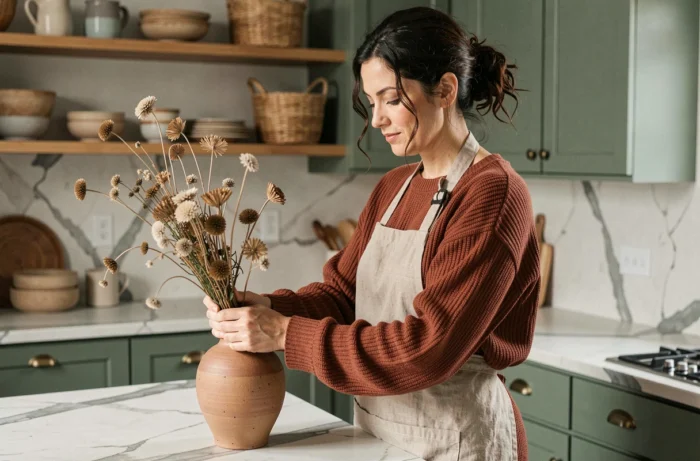
The report from Maison&Objet 2026 emphasizes a shift: decor inspiration now focuses on the origin and production of objects, not just on color palettes. The creators showcased at the fair claim imperfect surfaces, raw textures, and deliberately non-uniform finishes.
This movement has a concrete translation in interiors. Handcrafted ceramics, small productions in stoneware or glazed terracotta are gaining ground in kitchens, bathrooms, and on tables. Wood left in a state close to raw (not varnished, simply oiled) is also becoming prominent in living room furniture.
The gap with the smooth minimalism of previous years is measured in the details:
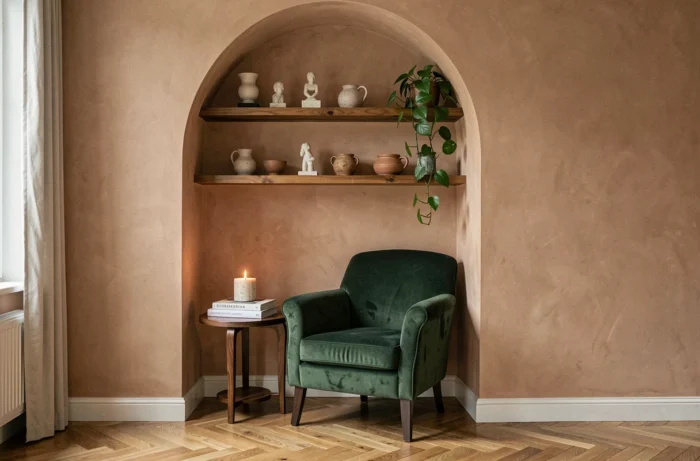
- Textured wall coverings (troweled plaster, brushed lime) replace uniform paint in living spaces
- Lighting fixtures made from raw materials (paper, hand-woven rattan, patinated metal) supplant standardized industrial models
- Upholstery textiles favor crumpled linen, boucle wool, and unbleached cotton, far from stretched synthetic fabrics
This orientation is not limited to high-end products. Mainstream brands are incorporating so-called “artisan” ranges, even if production remains mechanized. Visual irregularity is becoming a full-fledged decor code, not a flaw.
Playful Design vs. Soothing Minimalism: Two Visions of Home in 2026
A counterpoint appears in the observations made at the fair: unexpected shapes, exaggerated proportions, unusual material combinations designed to spark curiosity. This playful design contrasts with the dominant decor content online, which is largely centered on calm atmospheres and clean styles.
The reality of the market nuances this opposition. Households renovating or rearranging their interiors overwhelmingly choose soft colors (sand tones, beige, off-white) and sober lines. Furniture with quirky proportions remains confined to showrooms, design hotels, and collectors’ apartments.
Three factors explain this resistance:
- Cost: a sculptural piece of furniture, produced in small series, reaches prices unrelated to standard furniture
- Perceived durability: buyers fear that a strongly marked style will quickly go out of fashion, while a neutral interior ages seamlessly
- Compatibility: integrating a playful design piece into an existing living room requires a compositional mastery that most individuals do not possess
Author design thus functions as a laboratory. The ideas that emerge take several years to filter into catalogs accessible to the general public. Colors and materials come first, shapes last.
Energy Renovation and Decor Project: An Increasingly Constrained Link
A rarely addressed angle in decor trend articles: the MaPrimeRénov’ pathway, refocused in 2026, directly influences aesthetic choices. When a household undertakes a significant renovation (insulation, replacement of joinery, ventilation), the project necessitates rethinking interior finishes.
The decor project becomes a consequence of the energy project, not the other way around. The choice of wall coverings, flooring, or kitchen style comes after technical constraints, not before.
This interweaving alters the purchasing timeline. Decorative materials are selected at the end of the project, often under time pressure. The chosen colors and styles tend to lean towards safe values (light wood, neutral shades, modular furniture) rather than bold aesthetic bets.
This phenomenon reinforces the dominance of soothing and natural trends in truly inhabited interiors. Energy renovation pushes decor choices towards sobriety, regardless of what design fairs propose.
The gap between professional showcases and domestic reality is nothing new, but the data from 2026 makes it more readable. Artisan trends are progressing because they adapt to all budgets. Playful shapes remain a marker of distinction. And regulatory constraints, by imposing heavy projects, steer decisions towards durable and consensual interiors, where style is played out in texture and material, rarely in form.