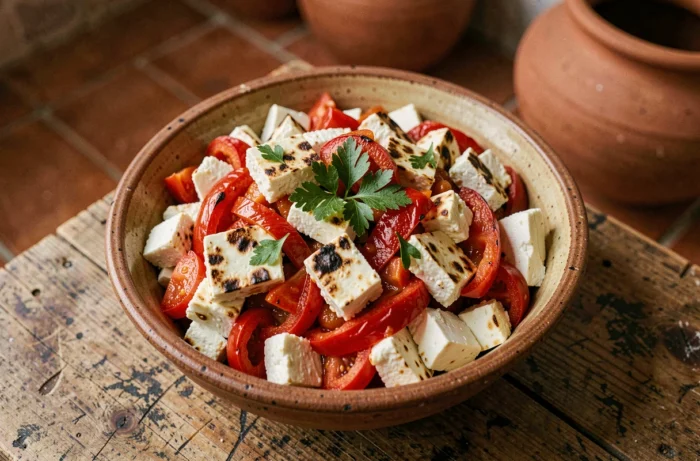
The fergese from Tirana is based on three ingredients (peppers, tomatoes, gjizë) and yet, the dish is anything but fixed. Depending on the city, the season, or the presence of cheese, the recipe changes in nature. Comparing these variations helps to understand what truly distinguishes the vegetarian fergese served in the restaurants of the Albanian capital.
Regional Variants of Fergese: Tirana, Gjirokastër, and Summer Version
| Variant | Vegetable Base | Cheese (gjizë) | Serving |
|---|---|---|---|
| Fergese from Tirana | Red peppers + tomatoes | Yes, melts and binds the preparation | Hot, bubbling gratin |
| Fergese from Gjirokastër | Tomatoes + onions (without peppers) | Yes | Hot |
| Fergese verore (summer) | Peppers + tomatoes + garlic | No | Warm or at room temperature |
| Fergese with liver | Tomatoes (+ offal) | Yes | Hot, not vegetarian |
This table highlights a often overlooked point: fergese is not a unique recipe but a family of preparations. The vegetarian Tirana version, the one that circulates the most online, is just one variation among others.
The Gjirokastër variant removes the peppers in favor of a tomato-onion duo. The fergese verore, on the other hand, omits the cheese and is suited for summer meals. As for the fergese with liver, some traditions present it as the historical version from Tirana, without any available source definitively settling the matter.
To make the Albanian fergese recipe in its Tirana version, the trio of red peppers, tomatoes, and gjizë remains the reference combination.
Gjizë in Fergese: a Technical Binder, Not Just a Simple Garnish
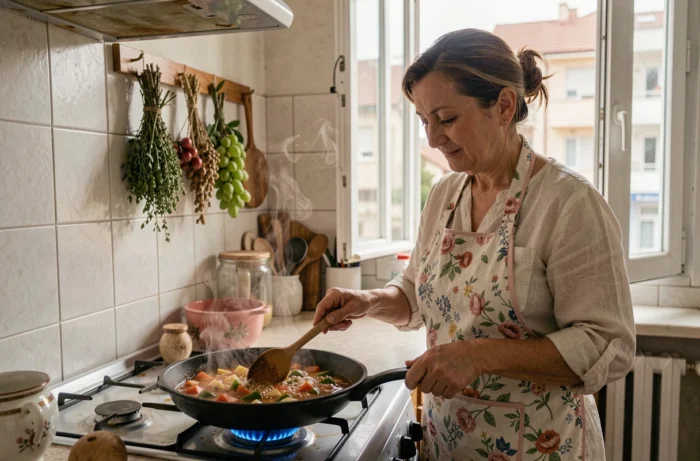
Most French-speaking recipes present gjizë as a fresh cheese to be added at the end of cooking. This description is incomplete. Gjizë melts and binds the vegetables together, creating a texture similar to a creamy gratin without resorting to béchamel, a roux, or yogurt.
This technical role explains why substitutions do not yield the same result. Replacing gjizë with ricotta (often suggested) alters the consistency: ricotta adds creaminess but does not bind the peppers and tomatoes as firmly. The dish remains good, but the texture changes.
Common Substitutions and Their Limits
- Ricotta is the closest to gjizë in terms of freshness, but it contains more moisture and melts differently during cooking
- Cottage cheese adds grain and a slight acidity, without producing the characteristic binding of the Albanian dish
- Crumble feta provides salty flavor but does not melt into a sauce, remaining in chunks in the preparation
No substitute exactly replicates the behavior of gjizë when heated. For a faithful result, the solution is to make your own gjizë from whey, a process that takes time but requires no specialized equipment.
Cooking Vegetarian Fergese: Steps That Change the Result
Online recipes focus on the list of ingredients. The difference between a successful fergese and an ordinary one lies in two cooking steps that are rarely detailed.
Cooking the Peppers Before Assembly
Red peppers must be cooked until tender before adding the cheese. Some versions roast them in the oven to develop a smoky flavor, while others sauté them in cubes in olive oil with a lid. The choice between grilling and covered cooking significantly alters the final taste of the dish.
Grilled and then peeled peppers give a more concentrated fergese, with slightly caramelized notes. Peppers cooked in a pan retain more juice and produce a more fluid sauce once mixed with the tomato.
Timing for Adding the Gjizë
Gjizë is incorporated when the vegetables are already cooked and still hot. A common mistake is to prolong cooking after adding the cheese: too long cooking after incorporating gjizë dries out the dish. The cheese should just melt and coat the vegetables, not reduce.
Fergese and Albanian Vegetarian Cuisine: A Contextual Dish
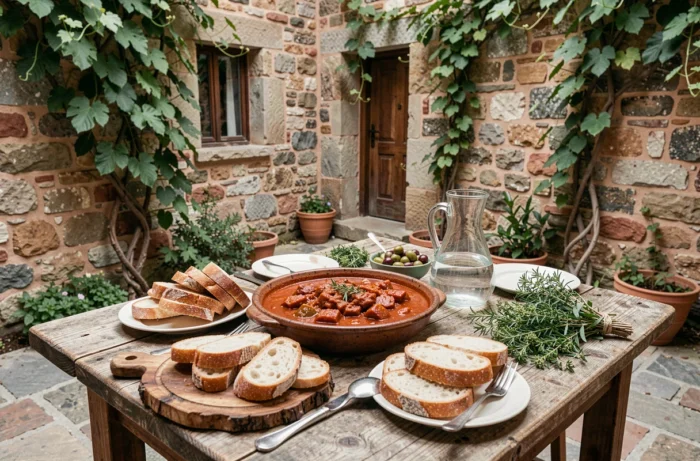
The vegetarian fergese does not exist as an isolated dish in Albanian cuisine. It is part of a meal where fresh bread plays a central role. The dish arrives bubbling in a small earthenware container, and it is the bread that serves as a utensil for eating.
This mode of serving explains the desired thick consistency. A fergese that is too liquid cannot be eaten with bread. The texture must hold on a piece without spilling, which brings us back to the importance of gjizë as a binder.
The coexistence of the pepper version, the liver version, and the summer fergese without cheese shows that the dish adapts to the available products depending on the season. In autumn and winter, when red peppers are still accessible, the gratin version with gjizë makes perfect sense.
In summer, the fergese verore without cheese is served warm or at room temperature, making it a different dish in its consumption logic.
The fergese from Tirana remains the most accessible entry point to discover Albanian vegetarian cuisine. The dish requires neither complex technique nor special equipment. The only real difficulty, outside of Albania, lies in gjizë, a fresh cheese that is hard to find in Western Europe and whose substitutes do not completely replicate its cooking behavior.