
Food labeled “senior” does not guarantee a nutritional profile that differs from adult food. A 2025 analysis published in Frontiers in Veterinary Science, which examined 61 dog foods sold in the United States, found that “senior” formulas did not consistently differ from adult formulas. Choosing vitamins for an older dog should therefore be based on the animal’s actual condition, not a marketing label.
Fat-soluble vitamins in older dogs: the risk of cumulative overdose
Vitamins A, D, E, and K accumulate in fatty tissue and the liver. For a senior dog eating a complete diet, adding a multivitamin supplement can lead to excess intake, especially if several products are given at the same time. Vitamin A overdose can cause liver damage and bone abnormalities. Excess vitamin D disrupts calcium and phosphorus metabolism and can damage the kidneys.
Before supplementing with fat-soluble vitamins, we recommend having the dog’s entire diet analyzed. Blood tests can check circulating vitamin D levels and assess liver function. Without this information, supplementation amounts to adjusting a dose blindly.
Vitamin E, often presented as a harmless antioxidant, is no exception. At moderate doses, it helps protect cells. But it can interfere with blood clotting when it builds up—an already vulnerable area for some older dogs taking anti-inflammatory medication. Any fat-soluble vitamin supplementation requires prior veterinary advice.
A comprehensive guide to vitamins for senior dogs explains recommended intake based on the animal’s size and health.
Omega-3s and cognitive function in senior dogs: more than joint support
Omega-3 fatty acids (EPA and DHA) are widely associated with joint support. Their role in preserving cognitive function in older dogs is less well known, but just as well documented. DHA is a structural component of neuronal membranes. As a dog’s metabolism slows with age, its ability to synthesize DHA from plant-based precursors declines.
Marine sources such as fish oil and krill oil provide EPA and DHA directly in a bioavailable form. Plant oils such as flaxseed oil provide ALA, a precursor that dogs convert to DHA only in small amounts. Choosing a marine source is not a matter of preference; it is a metabolic necessity for a senior dog.
Omega-3 dosage and quality
Oil quality matters just as much as dosage. Oxidized fish oil loses its anti-inflammatory properties and produces free radicals. Check the expiration date, storage instructions (refrigerate after opening), and whether the label lists a peroxide value.
EPA helps with joint inflammation, while DHA supports neuronal membranes—both are necessary. A product that does not list its EPA/DHA ratio makes it impossible to tailor supplementation to the dog’s actual needs.
Misleading signs of vitamin deficiency in older dogs
A dull coat, reduced appetite, or unusual fatigue often prompt owners to give their dogs vitamin supplements. However, these signs alone are not enough to confirm a deficiency. They may point to kidney disease, a thyroid disorder, advanced periodontal disease, or an early-stage tumor.
A change in overall health calls for a veterinary checkup, not a dietary supplement as the first step. The veterinarian will assess kidney, liver, and thyroid function before determining whether there is a nutritional deficiency. For example, giving vitamin D to a dog with kidney disease can worsen soft-tissue calcification.
The 2025 FEDIAF recommendations confirm that there is no universal nutritional profile specifically for senior dogs. Needs vary according to activity level, body condition, and any underlying health problems. Supplementation is not an automatic consequence of age.
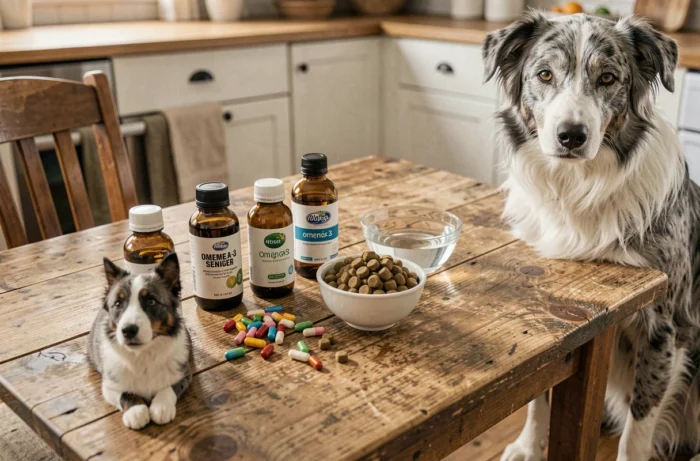
Choosing a vitamin supplement for a senior dog: what to look for on the label
Dietary supplements for dogs are not subject to the same regulatory requirements as veterinary medicines. Pay close attention to several practical details:
- A list of active ingredients with their dosages: a product labeled “vitamin complex” without specifying the amount of each vitamin cannot be properly assessed. Look for amounts in IU or mg per dose.
- The chemical form of each vitamin: dogs absorb cholecalciferol (vitamin D3) better than ergocalciferol (D2). D-alpha-tocopherol (natural vitamin E) is more bioavailable than dl-alpha-tocopherol (the synthetic form).
- Whether the product could interact with any current medication: some supplements contain calcium or iron, which can interfere with the absorption of medications commonly used in older dogs, including anti-inflammatory drugs and antibiotics.
- Whether the product has been quality-tested by an independent laboratory or complies with a recognized standard (FEDIAF, NRC).
B vitamins and cellular energy
B vitamins are water-soluble, so the risk of overdose is low because excess amounts are excreted in the urine. In senior dogs, vitamins B6 and B12 support energy metabolism and red blood cell production. B12 deficiency is more common in dogs with chronic intestinal malabsorption.
Unlike fat-soluble vitamins, B vitamins can be supplemented with a wider safety margin, making them a reasonable first choice when nutritional support is being considered without a full blood workup.
Choosing a vitamin supplement for a senior dog comes down to three questions: Has a veterinarian confirmed the need? Is the product’s composition clearly listed? Does the dosage fit into the existing diet without causing an imbalance? Any other approach amounts to supplementing as a precaution, with a poorly understood balance of benefits and risks.