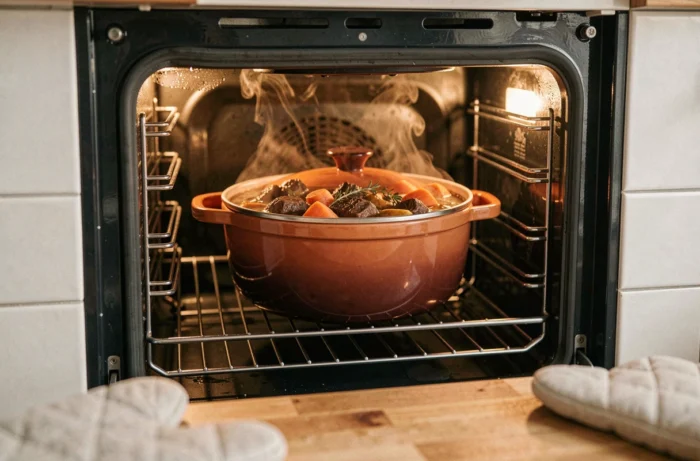
Slow-cooking a dish in the oven is based on a simple principle: keep the liquid at a steady simmer without ever letting it reach a full boil. The temperature range most commonly used to achieve this is between 120 and 150 °C on the oven dial.
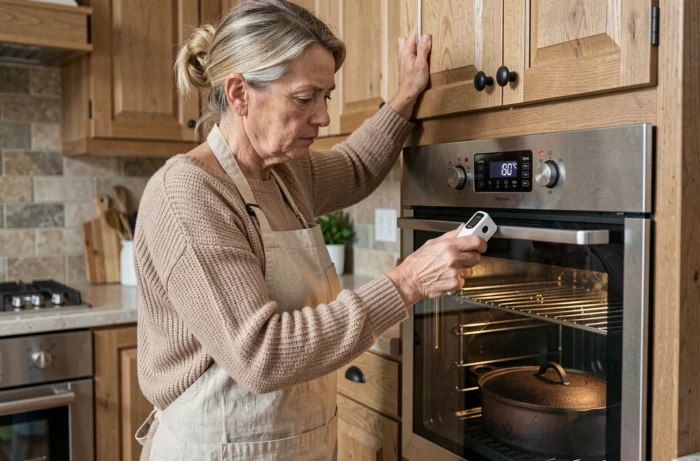
This setting alone does not guarantee the result, because the thermostat measures the air temperature inside the oven, not the temperature of the liquid in the casserole. Two ovens set to the same temperature can therefore produce noticeably different results.
Oven setting and actual liquid temperature: two different measurements
The most common misconception is to treat the oven setting as a reliable indicator of what is happening inside the casserole. Hot air surrounds the dish, but how quickly its contents heat up depends on the amount of liquid, the thickness of the sides and the lid.
To adjust the cooking, watching the liquid is more reliable than reading the dial. A gentle simmer, with small bubbles rising slowly to the surface, indicates that the liquid is just below boiling point. A vigorous boil, on the other hand, dries out the meat and reduces the sauce too quickly.
In practice, an oven set to between 130 and 140 °C with a covered cast-iron casserole will generally produce a gentle simmer. With a lighter dish or an oven that runs hot, lowering the temperature to 120 °C may be necessary. Make adjustments during the first few minutes: open the oven after half an hour, check the liquid, then adjust by ten degrees if the broth is bubbling too vigorously or too gently.
A detailed guide to oven cooking time for beef bourguignon can help you fine-tune these guidelines for a specific dish, where the amount of wine and stock directly affects the cooking time required.
Oven or stovetop: simmer consistency and sauce reduction
Comparing the two methods using the same dish and recipe highlights practical differences that go beyond how tender the meat becomes.
Consistent heat
On the stovetop, the heat source comes from below. The base of the casserole receives all the energy, creating a hot spot that can make the sauce stick or cause sudden bursts of boiling. The oven surrounds the dish with heat on all sides, reducing temperature differences between the bottom and surface of the liquid. The simmer stays more consistent without intervention.
Sauce reduction
On the stovetop, evaporation is concentrated in the middle of the liquid, where the heat rises most strongly. The sauce reduces unevenly, with a risk of overcooking at the bottom. In the oven, evaporation is slower and more even, especially with the lid slightly ajar. The result is a sauce that thickens gradually without burning.
Monitoring and intervention
A stovetop stew needs frequent checking: stir every twenty to thirty minutes to stop the pieces from sticking. In the oven, this is much less of a concern. An oven-braised dish can cook for two to three hours without stirring, provided the liquid initially covers at least two-thirds of the pieces.
Here are the factors to consider when choosing between the two methods:
- The oven is better suited to cooking times of over an hour, when consistency matters more than responsiveness
- The stovetop allows you to adjust the heat instantly, which is useful for shorter braises or when you want to speed up reduction at the end of cooking
- For thickened or cream-based sauces, the oven reduces the risk of the sauce splitting because the heat rises more gradually
Cut of meat and connective tissue: the secret to tender results
The oven temperature simply creates the right conditions. The final tenderness depends first and foremost on the cut you choose. Cuts rich in connective tissue become tender when cooked slowly at a low temperature, because the collagen gradually turns into gelatin. Chuck, beef cheek, shank and shoulder all respond well to this method.
Fillet or rump steak, which are low in collagen, will not benefit from a long braise. They will become dry and stringy, no matter how precisely you set the temperature. Choose the cut before you even turn on the oven.
The most reliable practical test for doneness is simple: the tip of a knife should slide into the meat without resistance. If the knife still meets firm resistance, the collagen has not fully broken down.
Cast-iron casserole and cooking ahead: choosing the dish and reheating
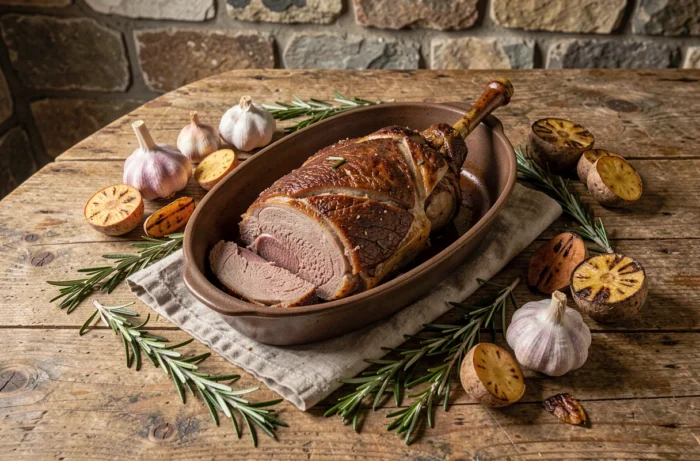
A heavy cast-iron casserole remains the go-to dish for oven braising. Its thermal mass absorbs heat slowly and releases it steadily, helping to offset thermostat fluctuations. A ceramic or glass dish works too, but has less thermal inertia, so temperature adjustments affect the liquid more quickly.
Making a braise the day before often enhances the flavor, as the aromas continue to develop while it rests. This requires a few precautions: cool the dish quickly after cooking, then refrigerate it within two hours. When reheating, bring it up to temperature gently rather than letting it boil. A full boil during reheating can cause a cream- or butter-based sauce to split.
The lid also affects energy use. According to recommendations shared by ADEME, covering a saucepan while cooking can reduce the energy required. This guideline applies to stovetop cooking and does not directly translate to a casserole in the oven, but the principle still holds: a well-fitting lid limits heat loss and keeps the liquid simmering at a lower setting.
Oven braising depends less on a precise thermostat setting than on watching the simmer, choosing the right cut of meat and using a dish that regulates heat. Setting the oven to between 130 and 140 °C is a starting point, not an absolute rule. The rest happens in the casserole.