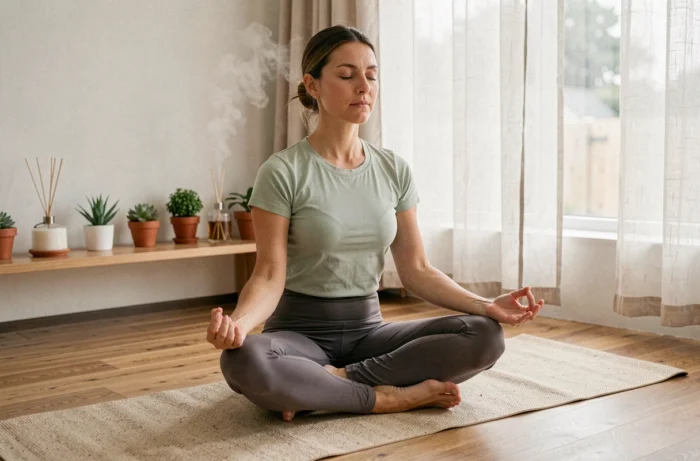
Hormonal yoga promises to rebalance the female endocrine system through targeted poses and dynamic breathing. But what do the available data say about its actual effects? A 2012 systematic review found a possible short-term effect on the psychological symptoms of menopause, without confirming any established effect on hormone levels or hot flashes. The key is to distinguish what this practice measurably offers from what it does not.
Hormonal yoga and menopause symptoms: what studies actually measure
| Area assessed | Level of evidence | Observed result |
|---|---|---|
| Hot flashes | Clinical trial (MsFLASH, 2014, 355 participants) | No reduction in frequency or severity compared with the control group |
| Sleep | Study reviews (variable quality) | Possible improvement reported in several reviews |
| Anxiety and mood | Systematic review (2012), moderate evidence | Positive short-term effect on psychological well-being |
| Fatigue and stress | Preliminary evidence | Benefits reported; further studies needed |
| Measured hormone regulation | No specific evidence | No study has demonstrated an increase or rebalancing of hormone levels |
This table highlights a discrepancy. The best-documented benefits relate to sleep, anxiety and fatigue—not hormone regulation, which the method claims to address in its very name.
The MsFLASH trial remains one of the most rigorous studies on the subject to date. 355 women assigned to yoga, aerobic exercise or usual activity: there was no significant difference in vasomotor symptoms. This result does not discredit the practice, but it helps set realistic expectations.
Those who turn to wellness and hormonal yoga can benefit from understanding these nuances so they can adjust their expectations and combine the practice with appropriate care when symptoms warrant it.

Stress and sleep: the best-supported effects of hormonal yoga
While evidence for hormonal effects is lacking, the picture is more promising when it comes to stress and sleep. Several reviews report improved psychological well-being among women in perimenopause or menopause who practice regularly.
The method developed by Dinah Rodrigues combines dynamic poses from Hatha Yoga and Kundalini Yoga with intense breathing (Bhastrika) and a Tibetan energy-circulation technique. This sequence involves moderate exertion that activates the parasympathetic nervous system after the session.
Plausible mechanisms for stress relief
Hormonal yoga engages the adrenal and thyroid glands through targeted compressions and inversions. The theory is that this mechanical stimulation promotes a better response to stress. Current evidence supports an effect on how people feel, not on hormone test results.
Deep-breathing exercises lower heart rate and muscle tension. This mechanism, common to all forms of yoga, explains some of the reported benefits for anxiety and mood.
Sleep: an avenue worth exploring
Several reviews cite improved sleep quality among practitioners. Sleep is the area where hormonal yoga shows the most consistent results, although the methodological quality of the studies remains variable. Women experiencing insomnia related to perimenopause may find it a useful complement, provided they do not use it as a substitute for medical care in cases of severe sleep problems.
Claims about hormone regulation: why caution is warranted
A recent clinical review concludes that yoga is not recommended as a specific treatment for reducing the frequency of vasomotor symptoms.
The distinction is clear. Practicing hormonal yoga to better manage stress, sleep more deeply or regain energy is supported by encouraging evidence. Practicing hormonal yoga to replace hormone replacement therapy or eliminate hot flashes is not supported by the available study results.
What hormonal yoga does not do
- It does not measurably increase estrogen or progesterone levels in published studies
- It does not reduce the frequency of hot flashes compared with a control group, according to the MsFLASH trial
- It is not a substitute for medical advice when menopause symptoms affect quality of life
Hormonal yoga is a wellness practice, not a treatment for menopausal symptoms. This clarification does not diminish its value: it helps people use it for what it can actually offer.
Making hormonal yoga part of your routine: practical guidelines
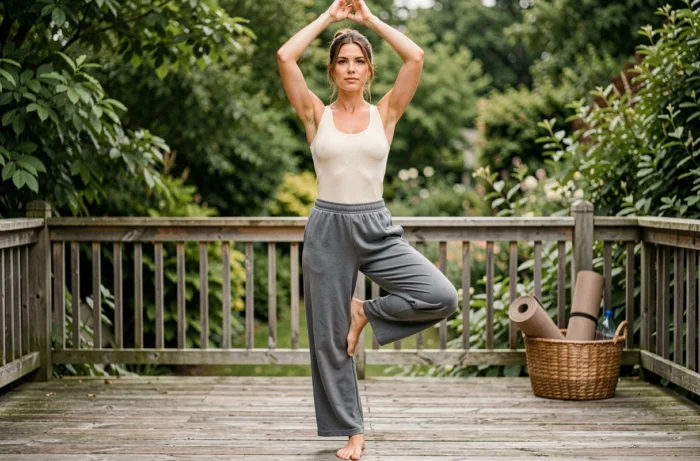
Dinah Rodrigues’s original method consists of a sequence lasting around 30 minutes, practiced several times a week. It targets four glands: the ovaries, thyroid, pituitary and adrenal glands. The poses are accessible, but the Bhastrika breathing technique requires supervised instruction to avoid hyperventilation.
- Choose an instructor specifically trained in hormonal yoga (the certification program by Dinah Rodrigues remains the benchmark)
- Start with two sessions a week and assess the effects on sleep and stress levels before increasing the frequency
- Keep a simple journal (sleep quality, anxiety levels, perceived energy) for four to six weeks to track changes objectively
- Consult a healthcare professional if vasomotor symptoms or sleep problems persist despite regular practice
Hormonal yoga is intended for women in premenopause or menopause, as well as those experiencing hormonal imbalances related to chronic stress or thyroid conditions. Regular practice over several weeks is key to seeing results: psychological benefits emerge gradually.
The available evidence paints a clear picture. Hormonal yoga offers measurable support for stress, sleep and emotional well-being in women going through hormonal transitions. Claims of direct hormone regulation have yet to be backed by solid scientific evidence. Keeping this distinction in mind makes it possible to get the most out of the practice without expecting it to do what it has not yet been shown to do.