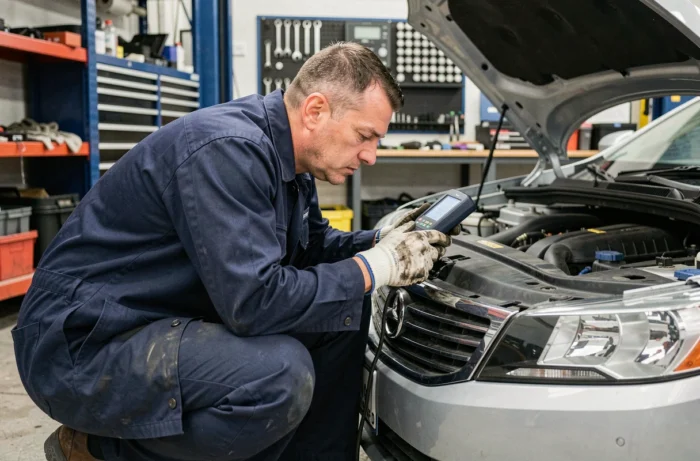
An orange warning light coming on on the highway, a rubbing noise when braking after a damp winter, a battery giving out on the morning of an important appointment: most everyday breakdowns stem from neglected or poorly timed maintenance. Keeping your vehicle reliable doesn’t require mechanic skills—just knowing what to check, when to check it, and what to look for.
Check the maintenance schedule before the odometer
It’s easy to rely solely on mileage when deciding when to service your vehicle. However, the manufacturer’s maintenance schedule specifies two intervals for each task: mileage and time. Whichever comes first determines when the work is due.
For a vehicle that isn’t driven much (less than ten thousand kilometers a year), the time interval often comes first. Engine oil degrades through oxidation even when the engine isn’t running, brake fluid absorbs moisture from the air, and hoses deteriorate over time. Waiting until the recommended mileage in these conditions means driving with fluids whose properties no longer meet the original specifications.
Each manufacturer publishes a maintenance schedule specific to the model and engine. If you’ve misplaced the paper manual, specialist portals such as zone-auto.eu bring together technical information by make and model, saving you from having to sift through conflicting forum posts.

Tire checks: pressure, tread wear, and legal requirements
A tire that’s underinflated by just a few tenths of a bar increases stopping distance, accelerates wear along the shoulders, and raises fuel consumption. Check tire pressure when the tires are cold, at least once a month, using the figures on the label attached to the driver’s door jamb or inside the fuel filler flap.
Tread wear and legal indicators
The legal minimum tread depth is set by the Highway Code. Tread wear indicators molded into the tire’s main grooves show when this limit has been reached: once the tread is level with them, the tire must be replaced. Uneven wear (more pronounced on the inside or outside) points to an alignment or suspension problem that should also be addressed; otherwise, the new tires will wear in the same way.
Winter tires and the Mountain Law: what has changed
Since November 1, 2024, only tires bearing the 3PMSF symbol are recognized as winter tires in areas covered by the Mountain Law. The M+S marking alone is no longer sufficient. The municipalities concerned are designated by prefectural order, and road signs mark the entrances to and exits from these areas.
The alternative to compliant tires is to carry suitable traction devices (chains or snow socks) that can be fitted to at least the two drive wheels. Check that they’re compatible with your wheel dimensions and available clearance before setting off—not on the side of the road in the snow.
- Check that the tires bear the 3PMSF symbol (a three-peaked mountain with a snowflake), not just the M+S marking
- Check with the prefecture in your destination department for a list of the municipalities concerned
- Practice fitting chains or snow socks at home to identify any compatibility issues
Brakes and brake fluid: the most underestimated safety item
The braking system wears gradually, making deterioration difficult to notice behind the wheel. You get used to it day after day, until the pedal feels spongy or a metallic squeal signals that the brake pads have worn down to the metal.
Brake fluid is hygroscopic: it absorbs moisture from the air over time. Water in the system lowers the fluid’s boiling point.
During hard braking (on a mountain pass or in heavy traffic), heat can cause some of the fluid to vaporize, creating a pocket of compressible gas in the system. The pedal then sinks with no resistance. Brake fluid flushing is listed in the maintenance schedule, generally every two years, regardless of mileage.
For the brake pads, a visual check through the openings in the caliper lets you see how much material remains. Replacing the pads before they wear down to the metal protects the rotors, which are considerably more expensive. The rotors themselves have a minimum thickness stamped on their face; below that limit, they must be replaced.
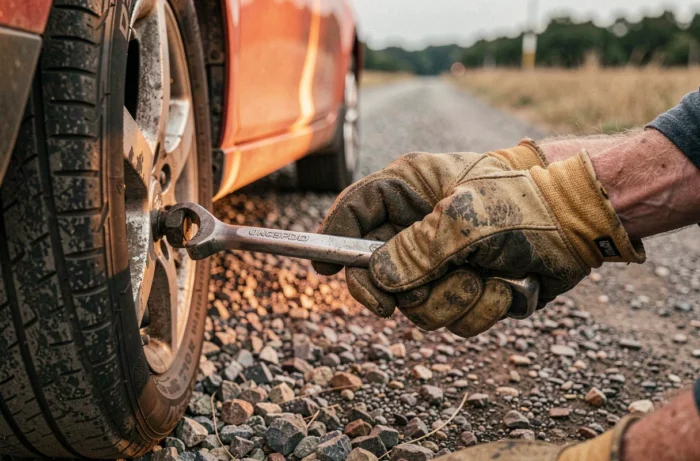
Battery and electrical system: prevent a breakdown rather than deal with one
Winter cold reduces a battery’s starting capacity, but summer heat often accelerates internal deterioration by causing the electrolyte to evaporate.
You can assess a battery’s condition with a simple multimeter: a resting voltage below 12.4 volts indicates that the battery is nearing the end of its life. A load test, offered by most auto centers and garages, provides a more reliable diagnosis by simulating the current draw of the starter motor.
- Clean the battery terminals with a wire brush as soon as a whitish or greenish deposit appears to prevent poor connections
- Check that the terminals are firmly tightened: a terminal that moves when touched can be enough to prevent the vehicle from starting
- If a vehicle is parked for several weeks, a slow battery maintainer will preserve the battery far better than jump-starting it with cables
A failing alternator can also mimic the symptoms of a bad battery. If a new battery goes flat within a few days, have the charging voltage checked with the engine running: it should be between 13.5 and 14.5 volts.
Checking these items (fluids, tires, brakes, and battery) according to the manufacturer’s schedule rather than relying on how the vehicle feels will prevent most avoidable breakdowns. The rest often comes down to model-specific issues, which can be anticipated by consulting other owners’ experiences and technical specifications for each engine.