Refreshing your wardrobe with on-trend pieces isn’t just about finding low prices. The real key is being able to quickly assess whether a garment—new or second-hand—is worth the investment in terms of fabric, fit and durability. Master these three criteria and you can buy less and choose better, without exceeding a tight budget.
Assessing a second-hand piece before buying: criteria that help you avoid mistakes
The average price of a second-hand item is often close to that of a new, entry-level garment. So buying second-hand without a plan doesn’t necessarily save you any money.
To make sure an on-trend second-hand piece is a good deal, check three things before anything else: the condition of the seams and finishing, the fabric composition (on the care label), and whether the garment can be altered if the fit isn’t quite right. A garment with coming-apart topstitching or fabric that’s pilling on the surface will cost more to restore than to replace.
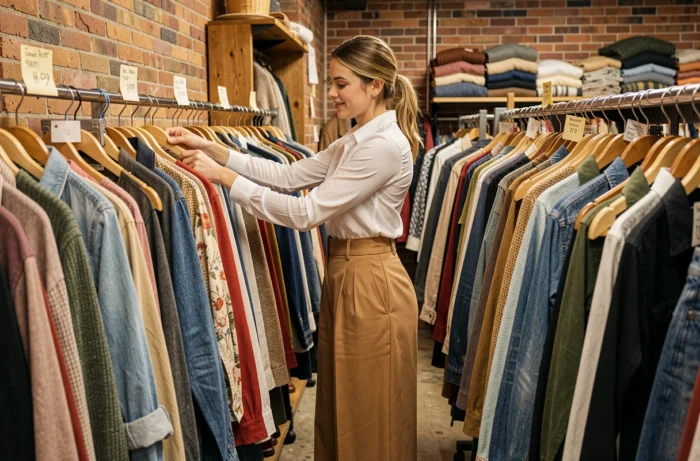
In a physical store (thrift shop, charity shop or kilo shop), you can inspect the garment on the spot. That’s a clear advantage over online platforms, where photos don’t show the fabric’s actual wear. Browsing shopping on Eleganzia makes it easy to find on-trend pieces with detailed descriptions, helping you narrow down your options remotely.
- Check the fabric’s elasticity by gently stretching a seam: if it doesn’t spring back into place, the fibres are worn out and the garment will quickly lose its shape.
- Read the composition label: a high proportion of natural fibres (cotton, linen, wool) tends to wear better than a blend made mostly of synthetic fibres.
- Check typical wear areas: the collar, underarms, crotch on jeans and cuffs on a sweater. These are the first places where garments tend to give way.
Compare condition, fabric and fit before looking at the price to make every second-hand purchase a considered decision rather than an impulse buy.
Textile repair bonus: transform an existing piece instead of replacing it
Before buying anything, it’s worth knowing about the repair bonus. This French scheme offers an instant discount when you have clothes or shoes altered by approved repairers.
In practice, trousers with a loose hem, a jacket with a stuck zip or shoes with a peeling sole can be given a new lease of life for a fraction of the cost of replacing them. Alterations can also update a garment’s fit: shorten an overly long coat, take in an oversized shirt or turn bootcut jeans into a straight-leg style.
The usual response to a slightly damaged or outdated item is to put it aside and buy something else. With the repair bonus, a targeted alteration costs less than buying new or second-hand, and the result gives you exactly the fit you want because the garment is already tailored to your shape.
On-trend wardrobe on a budget: choose versatile pieces
A common mistake when trying to refresh your style without spending a fortune is to accumulate highly distinctive trend pieces that only work with one outfit. A worthwhile on-trend garment is one that works with at least three outfits already in your wardrobe.
The three-outfit test
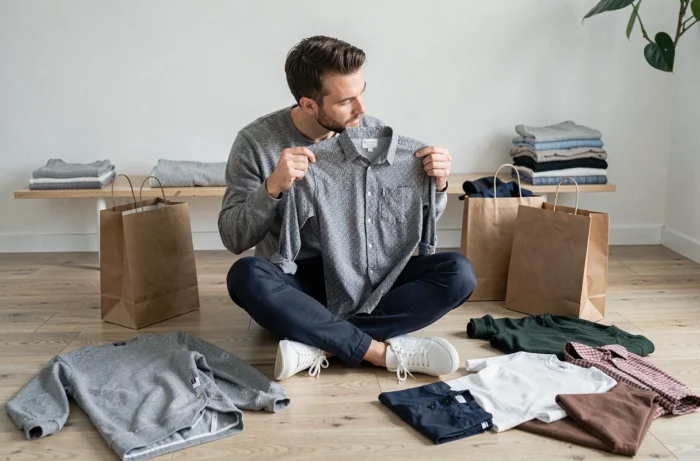
Before committing to a purchase, simply picture three complete outfits featuring the piece you have your eye on. If three different combinations come to mind easily, it’s a good buy. If only one outfit works, the piece may end up gathering dust on a hanger.
A well-fitting pair of jeans in a neutral colour goes with more tops than a patterned pair of trousers, even if the latter is more on-trend at the moment. Highly versatile pieces (dark-wash jeans, a structured blazer, a fine-knit sweater) form the foundation of a wardrobe, while accessories add a fashionable touch without the extra cost.
Accessories: the cheapest way to change up your style
A scarf, belt or bag can change the overall look of an outfit for far less than the cost of a garment. Accessories follow seasonal trends (colours, textures) without requiring the same investment as a statement piece.
Second-hand leather or metal accessories are often in very good condition because they’re washed less frequently than clothing. This is where second-hand offers the best value for money.
Buying second-hand in-store or online: two different approaches
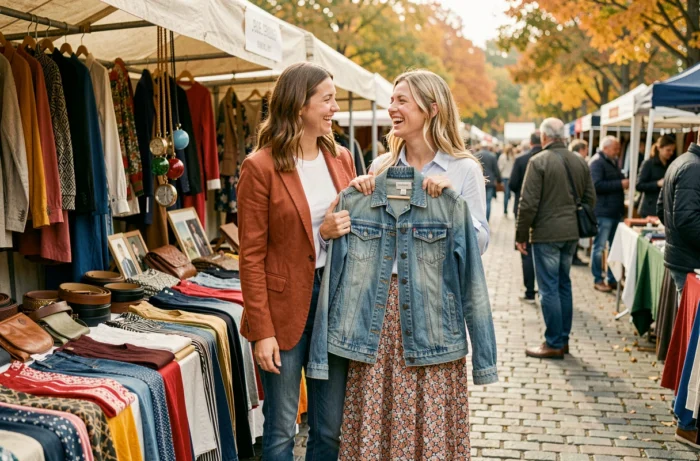
Thrift shops, kilo shops and charity shops let you feel the fabric, try on the garment and spot any flaws straight away. The per-kilo pricing at some kilo shops can make it possible to find a pair of branded jeans for around twenty euros, but what’s available depends on that day’s stock.
Online platforms offer a wider selection and filters by size, brand or condition. The risk is receiving a piece whose fit or colour is different from what you expected. To reduce that risk:
- Choose listings with photos of the item being worn or shown on a mannequin, rather than just laid flat.
- Ask for exact measurements (bust, back length, shoulder width) instead of relying on the size on the label, which varies from brand to brand.
- Check the return policy before buying: some platforms don’t refund shipping costs.
Combining both options is still the most effective strategy. Shop in person for structured pieces (jackets, trousers) where fit is crucial, and search online for knitwear, accessories and items with a more forgiving fit.
Refreshing your wardrobe without breaking the bank comes down to one simple principle: every new piece should fill an identified gap in your wardrobe, not satisfy an impulse. An on-trend garment bought at a good price but never worn costs more than having a piece you already love altered.