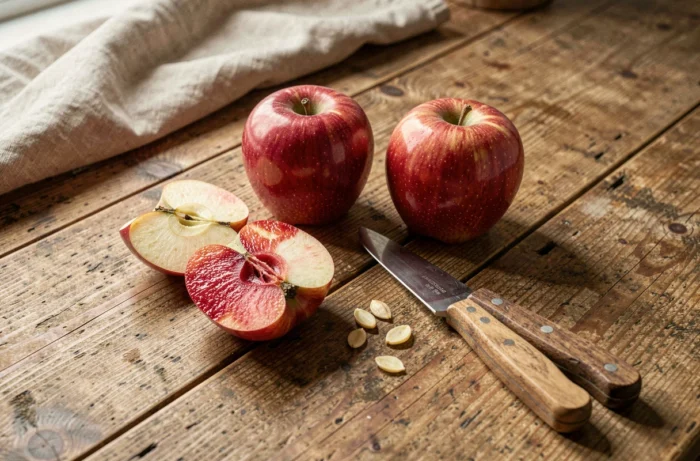
A red-fleshed apple is an apple whose flesh reveals a color ranging from bright pink to deep red when cut. This color comes from anthocyanins, natural pigments in the flavonoid family found in the flesh as well as the skin.
These varieties were developed by crossing naturally pigmented wild Asian apples with traditional cultivars. More than twenty years of selective breeding went into producing fruit that is colorful, sweet, and mild enough for everyday eating.
Anthocyanins and pigmentation: what gives apple flesh its color
In a traditional apple, anthocyanins are concentrated in the skin. In red-fleshed varieties, these pigments are also distributed throughout the flesh, creating their distinctive color. Concentration varies depending on the variety, ripeness, and growing conditions: the same apple can range in color from pale pink to deep red.
Anthocyanins are also antioxidants. Red-fleshed apples contain more of them than white-fleshed apples, precisely because the pigmentation extends throughout the fruit. This high antioxidant content is one of the nutritional benefits highlighted by producers.
One point is worth noting: the color of fresh fruit does not always survive processing. A study published in the Journal of the Science of Food and Agriculture found that fermentation leads to a loss of anthocyanins and a fading of the color.
For rosé ciders, for example, the final result depends as much on the processing method as on the choice of variety. Some producers add concentrate after fermentation or select specific yeasts to better preserve the pigmentation.
In cooking, this has a direct effect: prolonged cooking (such as in applesauce or a baked pie) dulls the red color, while eating the apples raw or cooking them briefly preserves it better. Knowing how to use red-fleshed apples helps you choose a preparation that delivers the look you want.
Kissabel, Red Love, Rosette: flavor profiles of red-fleshed varieties
Not all red-fleshed apples are alike. Their flavor profiles vary considerably, influencing how they are best used in the kitchen.
Kissabel
This is the most widely available variety in France, sold from September to November. Kissabel comes in several varieties (red, orange, and yellow), with the red one being the most deeply pigmented. Its flavor is described as sweet, with notes of red berries. The flesh is crisp, making it well suited to eating fresh.
Red Love and Sirena
Red Love and Sirena stand out for their more pronounced acidity. Their intensely red flesh works well in dishes that play on sweet-and-sour contrasts, such as fresh juice, fruit salads, and toppings for thin-crust tarts. Their acidity also helps them hold their shape during brief cooking.
Rosette and other pink-fleshed apple varieties
Some varieties, such as Rosette, have flesh that is more pink than red. Their flavor tends to be sweet, with less acidity. These apples are well suited to delicate desserts or applesauce for children. Nurseries offer these pink-fleshed apple trees for home gardens, though they take a few years to bear fruit.
Red-fleshed apples in the kitchen: preparations that make the most of their color
The culinary appeal of these apples comes down to two things: their flavor (often more complex than that of traditional apples, with notes of red fruit or berries) and the visual impact of their colored flesh.
Here are some preparations where red-fleshed apples make a real difference:
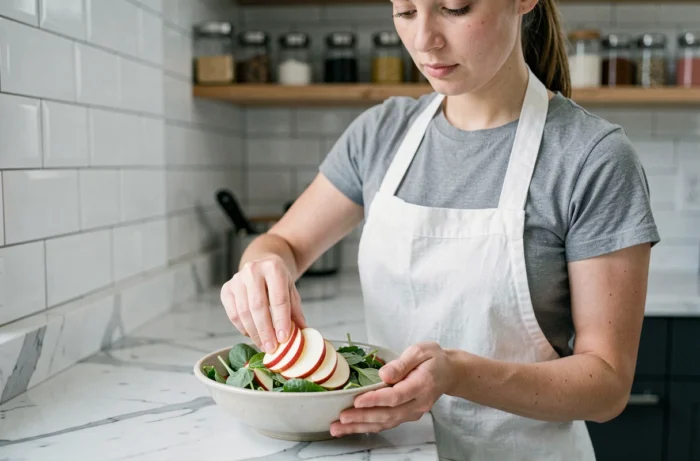
- Raw (in salads, fruit carpaccio, or on a cheese board): the color stays vibrant and the crisp texture is preserved. Thinly slicing a red Kissabel onto a cheese board with soft cheeses creates an immediate visual contrast.
- In juice and smoothies: cold pressing preserves much of the pigment and produces naturally pink juice, with no added coloring. The acidity of varieties such as Red Love balances blends with sweeter fruit.
- In quick-bake pastries (thin-crust tarts or quickly inverted tarte Tatin): the flesh retains a pink hue if the baking time is kept short. A thin-crust tart topped with thin slices of red-fleshed apple and baked at a high temperature for about fifteen minutes retains most of its color.
- In rosé cider: this is the use that made these varieties popular with professionals. Red-fleshed apples can produce naturally colored cider, although fermentation dulls the pigmentation, as mentioned above.
Growing a red-fleshed apple tree in your garden: what to keep in mind
Red-fleshed varieties are no more difficult to grow than traditional apple trees, but a few specific considerations are worth planning for.
Cross-pollination is still necessary: like most apple trees, red-fleshed varieties are not self-fertile. You need a compatible apple tree nearby to produce fruit. Checking pollination compatibility before buying a tree can prevent disappointment after several years of waiting.
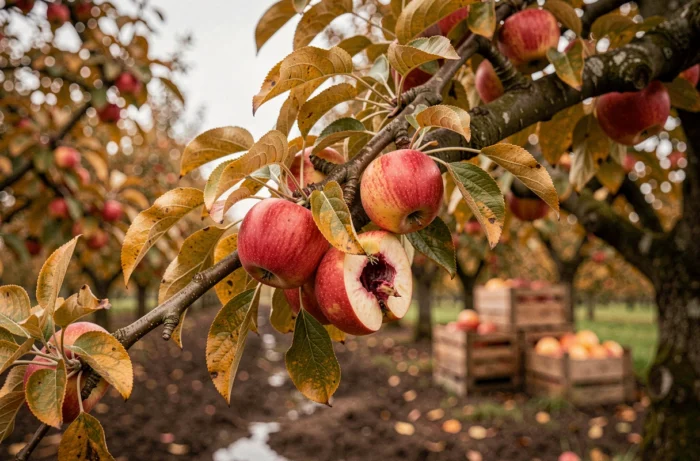
Red-fleshed varieties tend to ripen early. Harvest usually takes place between late August and mid-September, at the start of the apple season. They can be stored, but for less time than late-season varieties: most keep for a few weeks in the refrigerator.
In terms of disease resistance, these recently developed varieties often benefit from good tolerance, but this depends on the rootstock and local conditions. Well-drained soil and a sunny position encourage more intense flesh coloration, as sunlight stimulates anthocyanin production.
The window for finding these trees at a nursery is shorter than for common varieties. Specialist nurseries mainly offer them in autumn, the ideal time to plant bare-root fruit trees.
Red-fleshed apples remain a niche fruit in France, with production volumes limited compared with those of dominant varieties. Their relative rarity makes them sought after at markets and through direct sales, where the price per kilo is higher than for traditional apples.